
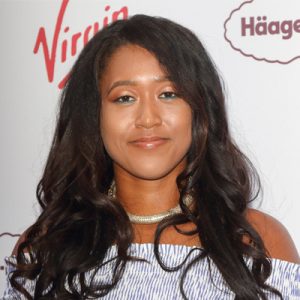
- OLLY announced a year-long brand ambassador partnership with Naomi Osaka, kicking off with the "Do What Serves You" campaign for Mental Health Awareness Month.
- OLLY is committing $1.5 million in grants over the next three years to nonprofits focused on mental health, beginning with a $30,000 grant to the SeekHer Foundation.
- The "Do What Serves You" 360 campaign rolls out across Times Square OOH, social media, OTT streaming platforms, and YouTube.
- Osaka says the partnership is personal, she has used OLLY products for years and is aligned with the brand's mission beyond its products.
Naomi Osaka is kicking off Mental Health Awareness Month with a major new deal. The four-time Grand Slam champion has been named brand ambassador for OLLY, launching the “Do What Serves You” campaign, a movement designed to encourage women to prioritize their own minds and bodies without guilt.
The campaign is responding to a real gap: according to a Hologic-Gallup survey, 63% of women struggle to put their own health first, often placing others’ needs ahead of their own.
For Osaka, the message hits close to home. As a mother and long-time mental health advocate, she has been open about her own battles with depression and burnout, becoming one of sport’s most visible wellness voices.
On the court, Osaka continues her strong comeback. In 2025 she reached her first WTA final since returning from maternity leave at Auckland, made the final at Montreal, and reached the US Open semifinals, returning to the Top 20 for the first time since January 2022. She currently sits at WTA World No. 15.
Off the court, her brand portfolio keeps expanding. Beyond OLLY, recent endorsements include Maybelline New York, where she was named the brand’s first-ever Brave Together Global Ambassador and Beats by Dre, fronting a campaign alongside Angel Reese and Sha’Carri Richardson.
She also holds long-standing deals with Nike, Mastercard, and Workday, and continues to build her own skincare label, Kinlo.
This marks Osaka’s first formal partnership with OLLY, though she notes it feels natural given her years of personal use of the brand’s products.
OLLY has a proven track record of aligning with high-profile women on wellness. Earlier in 2025, the brand named supermodel Ashley Graham as its brand ambassador, a reunion after Graham first connected with OLLY back in 2018.
OLLY has also partnered with comedian Heather McMahan for its Mood + Skin personal care launch, and became the Official Health & Wellness Partner of the Golden State Valkyries as a founding sponsor of the WNBA franchise.
This is a pattern worth noting across the sports-wellness crossover space. Just as Maria Sharapova made headlines investing in the wellness brand Amulet, and Serena Williams has leveraged her icon status in high-profile brand activations like her Lincoln Navigator collaboration with Ford, elite athletes are increasingly pairing their personal stories with brands that reflect their real values.
Over the course of the year-long deal, Osaka will collaborate with OLLY on content, campaigns, and activations informed by her personal wellness journey, while the brand’s $1.5 million grant commitment will support nonprofits including Girl Up, the National Menopause Foundation, and Postpartum Support International.
Takeaways
This deal is more than a celebrity stamp on a vitamin bottle. Naomi Osaka has built her off-court identity squarely around mental health advocacy, and OLLY has spent years embedding that same mission into its brand DNA through grants, nonprofit partnerships, and campaigns built around real women’s experiences.
That alignment is the story here. Osaka isn’t being handed a check to smile in an ad; she says she’s been using the products for years and the campaign message reflects how she actually lives. That authenticity is increasingly what separates deals that resonate from deals that get scrolled past.
For OLLY, adding Osaka to a roster that already includes Ashley Graham, Heather McMahan, and the Golden State Valkyries signals a clear strategy: own the intersection of women’s wellness and mental health before competitors do.
With Osaka openly discussing her own depression for years, does this partnership cross a meaningful line from endorsement to advocacy, and does that distinction matter to consumers?
Could a year-long deal evolve into something deeper (a co-created product line or equity stake) given that Osaka has a history of taking ownership positions in brands she believes in?