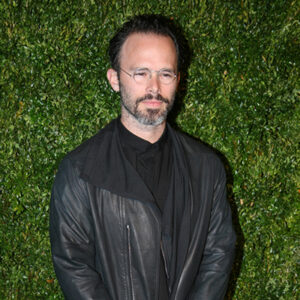
- Contemporary artist Daniel Arsham has signed with WME for worldwide representation in brand partnerships and digital ventures.
- Arsham was previously represented for commercial endorsements by CAA agent Yale Jesser.
- The signing follows a busy 2026 for the artist, including the release of his book Future Relic and his London solo exhibition Time Fold.
Contemporary artist Daniel Arsham has officially signed with WME for representation in brand partnerships and digital ventures.
For two decades, Arsham has blurred the lines between sculpture, architecture, fashion, and pop culture. He is best known for his signature “fictional archaeology” technique, turning modern cultural items into eroded relics using quartz, volcanic ash, and selenite crystals.
Beyond traditional galleries, Arsham has created high-profile collaborations with global names, including a runway collection with Kim Jones for Dior, custom art cars with Porsche, and limited sculptural releases with Tiffany & Co. and Pokémon. He also co-founded the design studio Snarkitecture and serves as the creative director for the Cleveland Cavaliers.
Arsham moves to WME after previously working with Creative Artists Agency (CAA), where commercial endorsements agent Yale Jesser oversaw his commercial partnerships.
The signing comes during a productive stretch for Arsham. In March 2026, he published his career and business guide, Future Relic: Failures, Disasters, Detours, and How I Made a Career as an Artist.
He also opened his major solo show Time Fold at Perrotin London in summer 2026, following his 2025 What Remains exhibition in Dubai.
Arsham joins a rapidly diversifying roster at WME as the agency deepens its footprint across non-traditional talent sectors. The move mirrors recent multidisciplinary additions, including digital creator Jordyn Lucas and producer Kevin Brauer, who came aboard to scale his global presence.
Takeaways
Arsham’s move from CAA to WME underscores how top talent agencies now treat elite visual artists like multi-platform intellectual property. In today’s market, an artist of Arsham’s caliber carries the cultural weight, consumer pull, and dedicated following traditionally associated with pro athletes and film stars.
Brand partnerships in the art world have evolved past simple logo placement; they now involve deep product architecture, multi-season capsule drops, and digital world-building.
By aligning his digital and corporate ventures with WME, Arsham positions his studio to explore larger Hollywood ties, interactive tech platforms, and high-end industrial design deals on an unprecedented scale.
Will WME help Arsham transition into directing or producing narrative films, moving his visual aesthetic onto the big screen? How will Arsham balance high-volume commercial brand drops with the scarcity required by the traditional fine art market? Will this signing lead to major gaming, virtual reality, or consumer electronics partnerships?